A Camera on One Polar Bear Caught Two More Greeting Him Nose to Nose
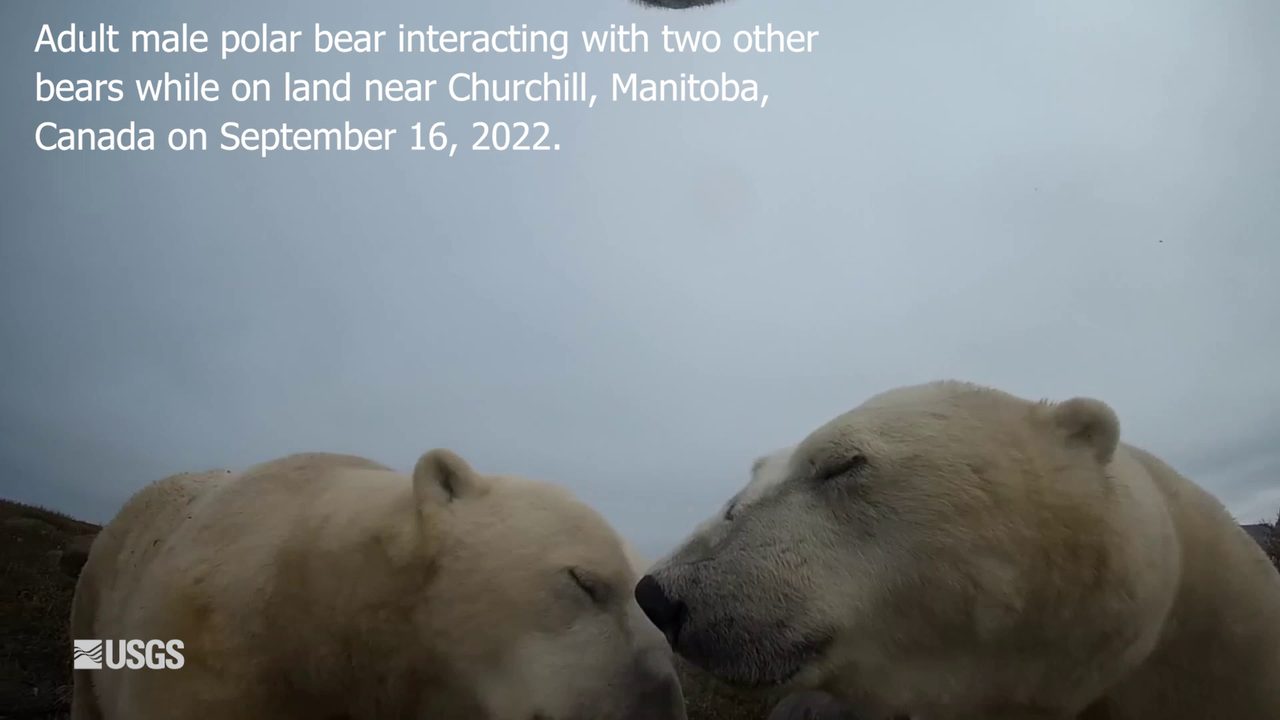
On September 16, 2022, a collar camera on an adult male near Churchill, Manitoba, recorded him meeting two other bears on land. USGS published the clip; the scientists' own question was how much energy bears burn on shore.
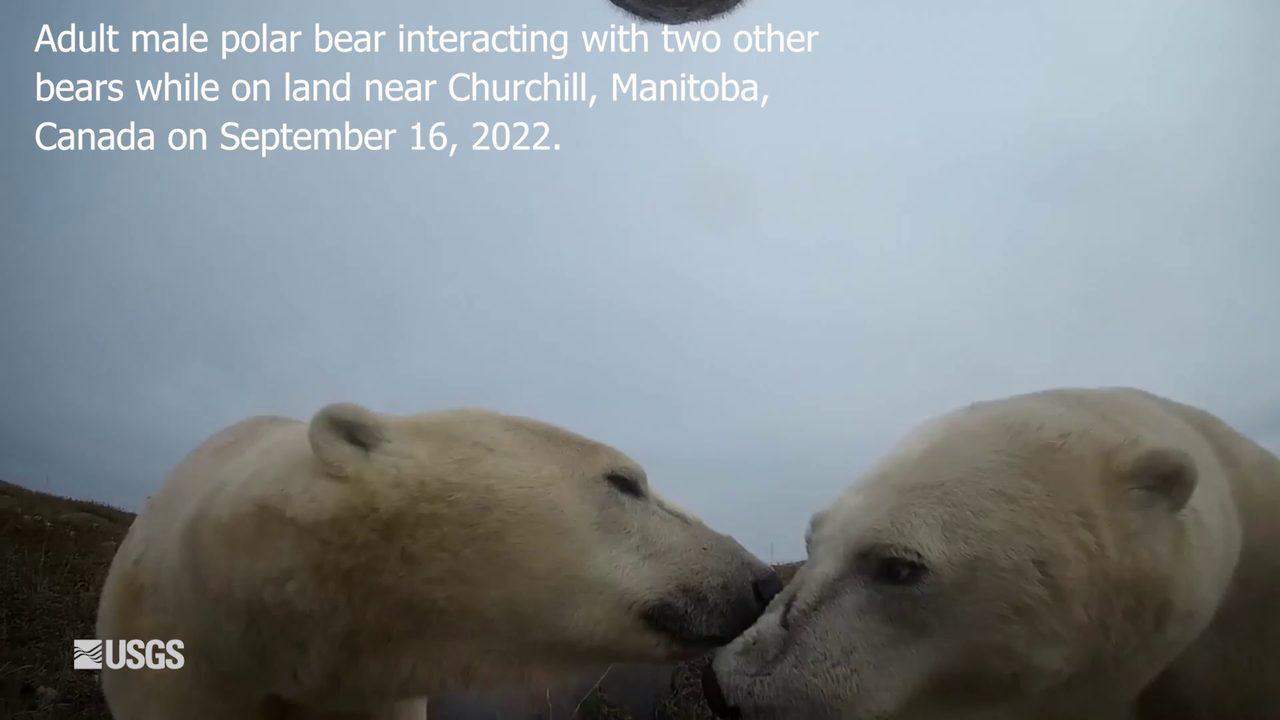
USGS describes this clip as point-of-view footage of an adult male polar bear interacting with two other bears while on land near Churchill, Manitoba, on September 16, 2022. The camera is on the male's collar, so the other two bears are the ones in front of the lens.
What we can and cannot say
The footage does not come with an explanation, and USGS does not give one. We will not guess whether this was play, a greeting or a test of strength. What the frames do show is that adult males on shore in September are not always alone.
That matters for the study the collar belongs to. The researchers measured each bear's daily energy use, and found a five-fold range between individuals. One adult male rested 98% of the time. The most active bear traveled 330 kilometers (205 miles). Social contact is a form of activity too, and the collars' motion sensors and cameras let the team connect behavior to energy.
How the collar camera works
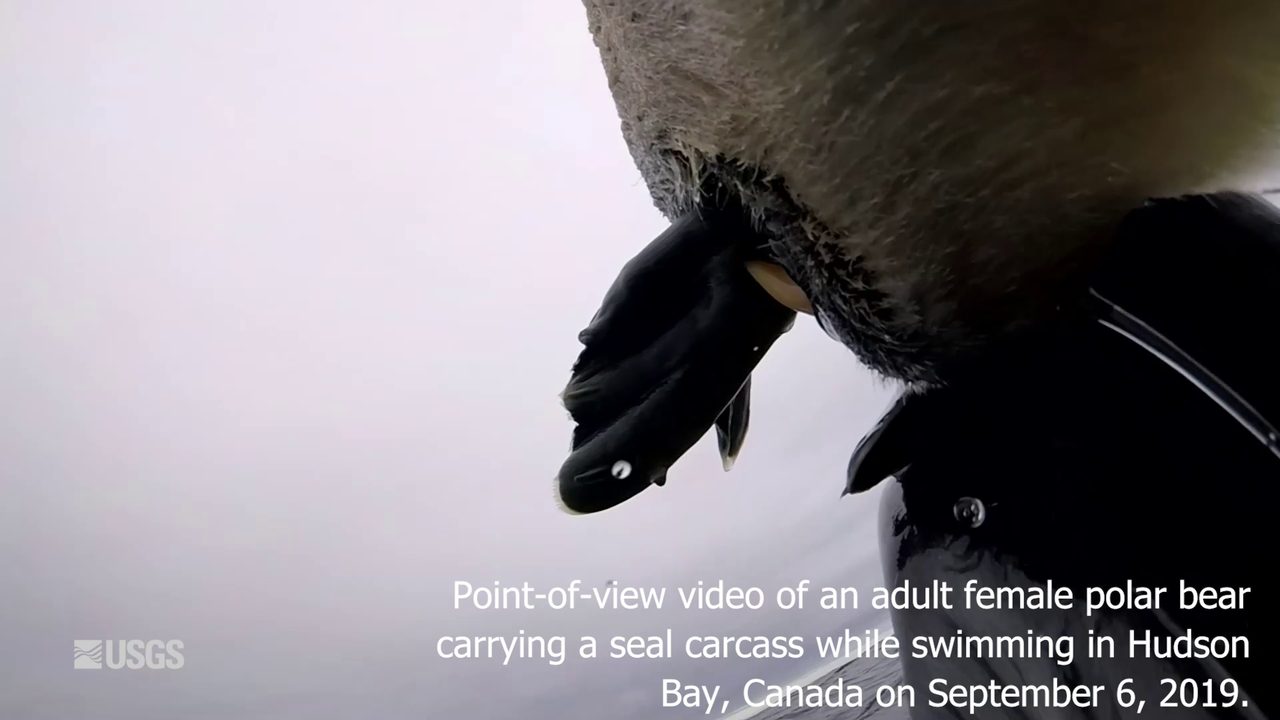
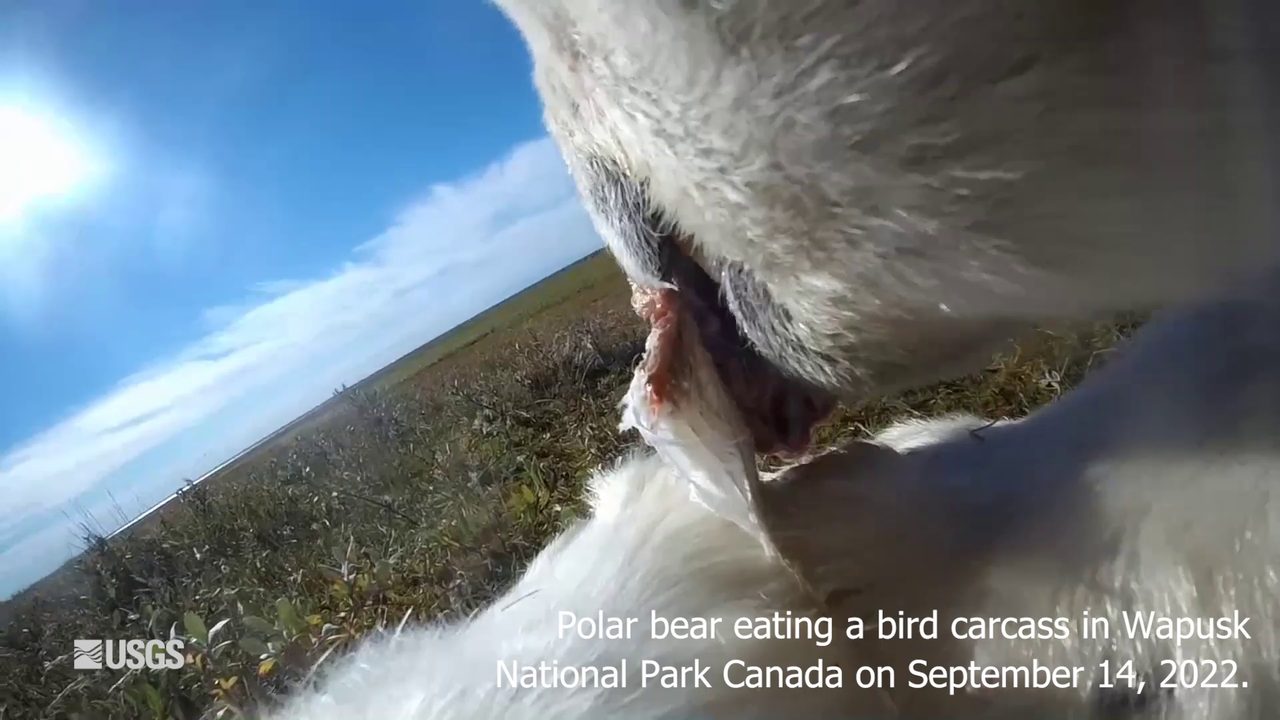
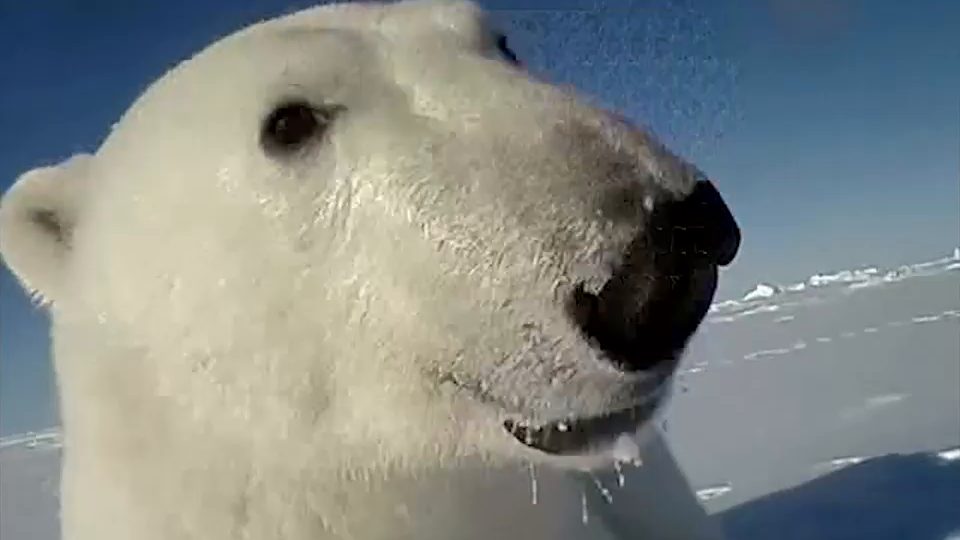
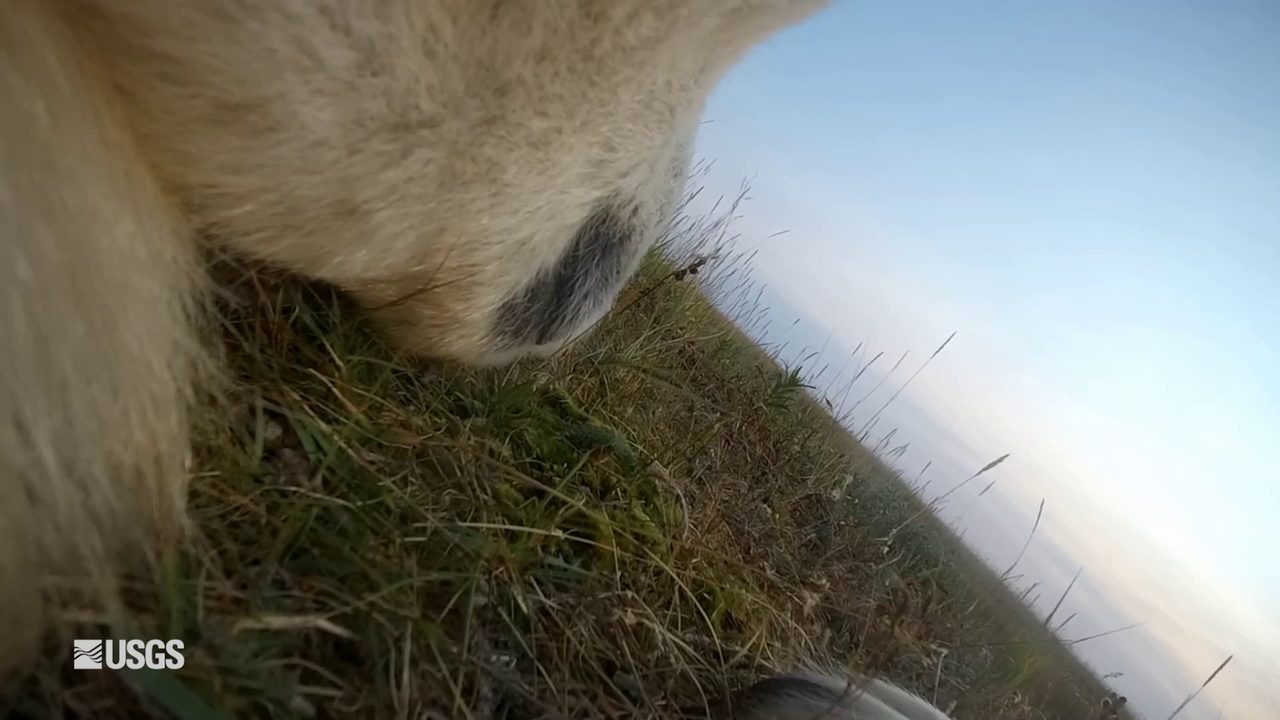
The camera hangs under the bear's chin and points forward, which is why the other bears fill the frame and the wearer is almost invisible. Each collar also carried GPS and a three-axis motion sensor. The team used the video and motion data together to sort each bear's time into resting, walking, feeding and swimming.
Adult males in western Hudson Bay usually weigh 300 to 450 kilograms, and the heaviest bear recorded in Wapusk National Park weighed more than 700. Size is a buffer: a big male carries more fat into the summer than a young female does.
The cost of a quiet summer
By the end of the three-week measurement windows, almost every bear had lost weight, about one kilogram a day on average. The authors concluded that neither resting nor foraging would let polar bears stay on land beyond a limited time.
Size is not a guarantee. The paper cites earlier modeling that up to 24% of adult males could die of starvation if the summer fast in western Hudson Bay stretches to 180 days.
USGS's public-domain footage; we re-saved frames and did not alter what the camera recorded.
Next case file 012 →One Polar Bear Rested 98% of the Time. Another Walked 330 Kilometers. Both Lost Weight.The record
- Date
- September 16, 2022
- Location
- Near Churchill, Manitoba, Canada
- Depth / setting
- On land
- Camera
- USGS GPS video collar on a free-ranging polar bear
- Animals
- Polar bear (Ursus maritimus)
- Footage
- U.S. Geological Survey
- Rights
- Public domain
Sources
- U.S. Geological Survey, "POV Polar Bear Collar Cam B-roll 2019, 2021, and 2022"
- Pagano et al., "Polar bear energetic and behavioral strategies on land with implications for surviving the ice-free period," Nature Communications 15:947 (2024)
- Washington State University news release, February 13, 2024
- Arctic Focus, "A polar bear's eye view into the increasing ice-free season"
Published 2026-11-15 · Corrections: contact@wildevidence.com