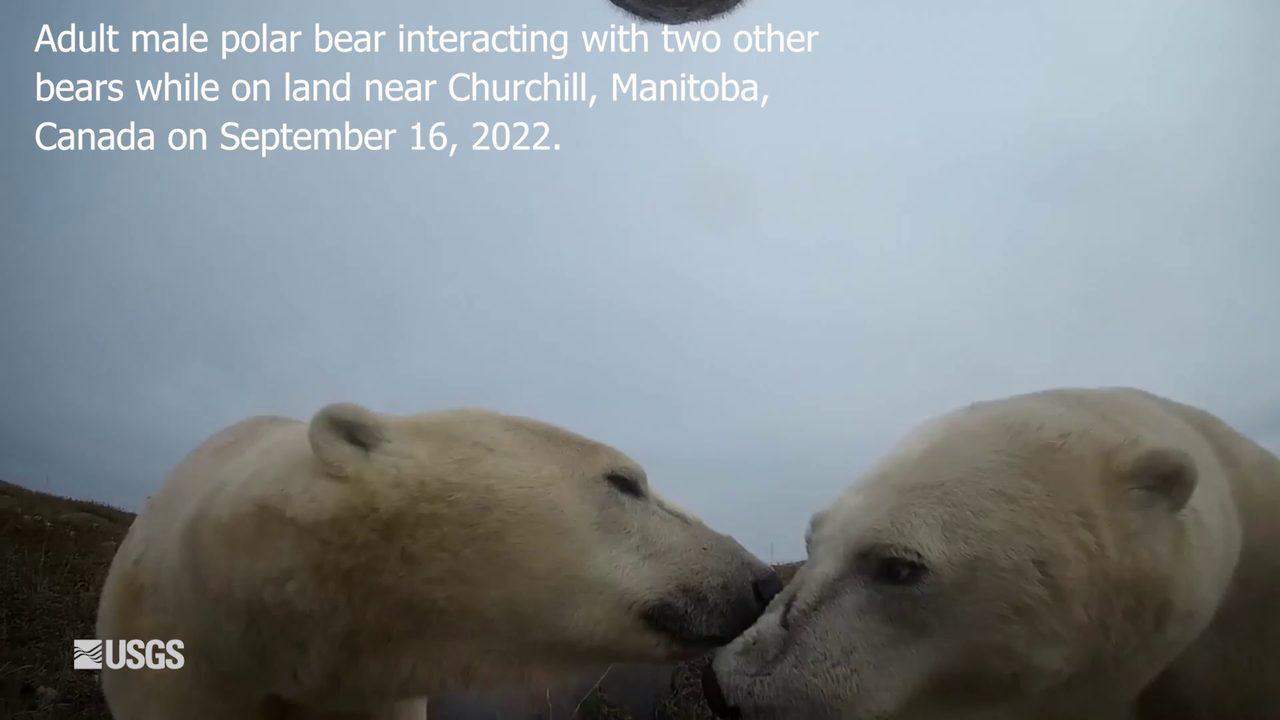
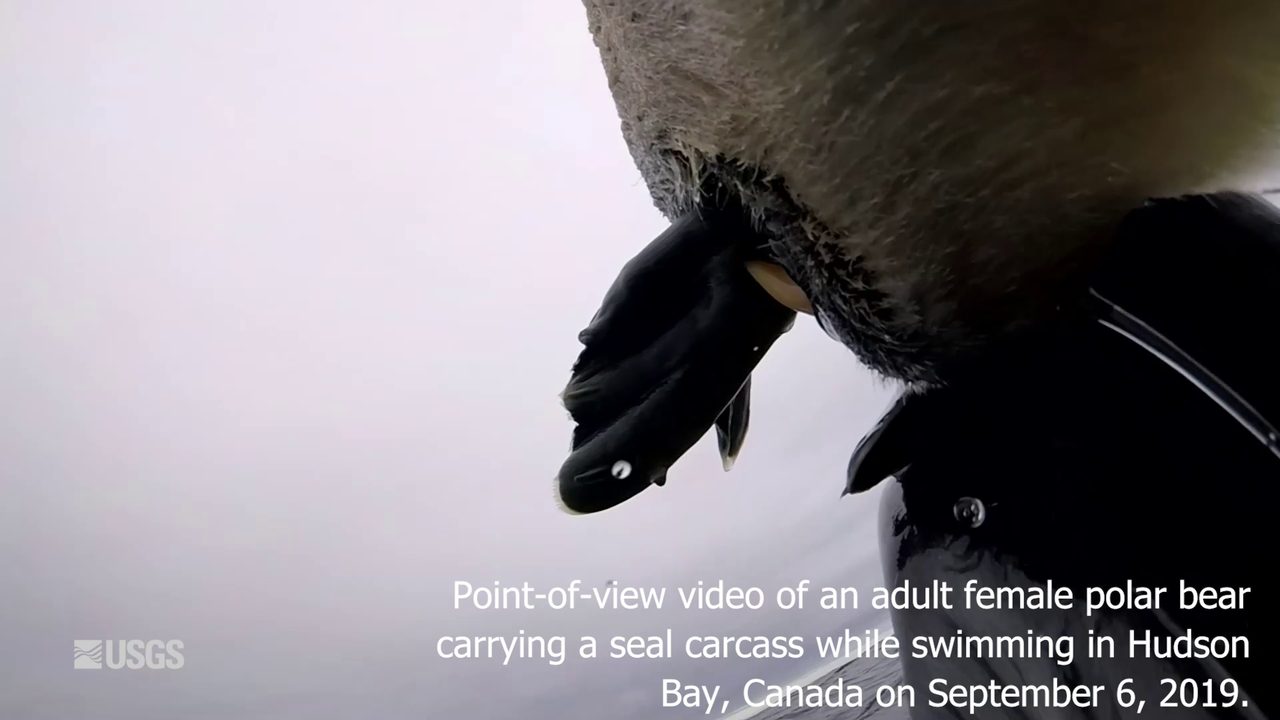
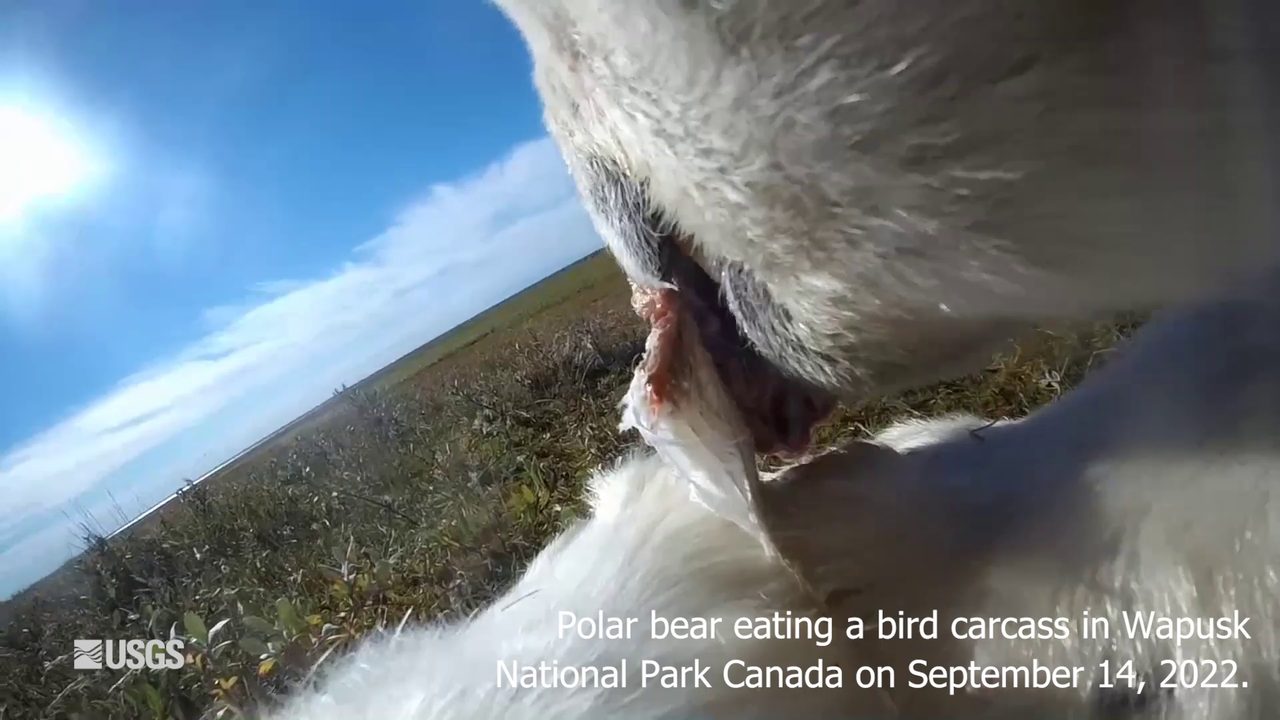
One Polar Bear Rested 98% of the Time. Another Walked 330 Kilometers. Both Lost Weight.
USGS collar cameras followed 20 bears through the ice-free summer in Manitoba. The two extremes, a bear that barely moved and a bear that never stopped, are the study's clearest result.
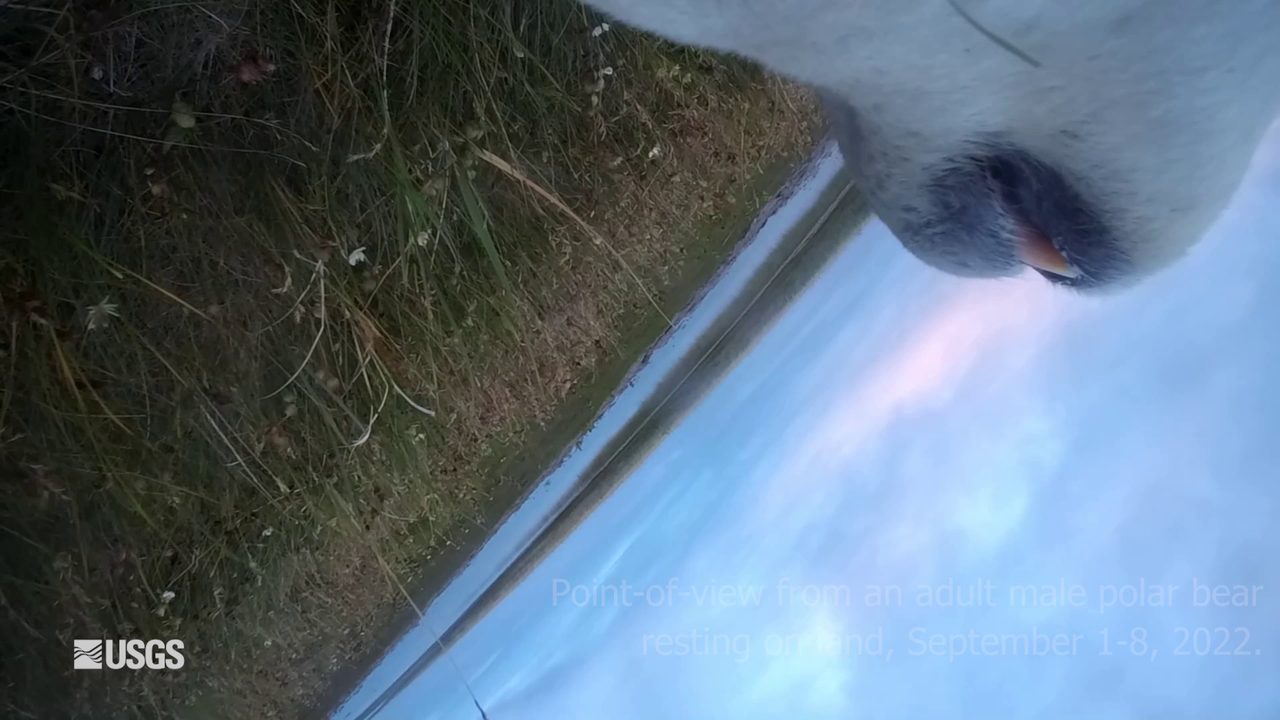
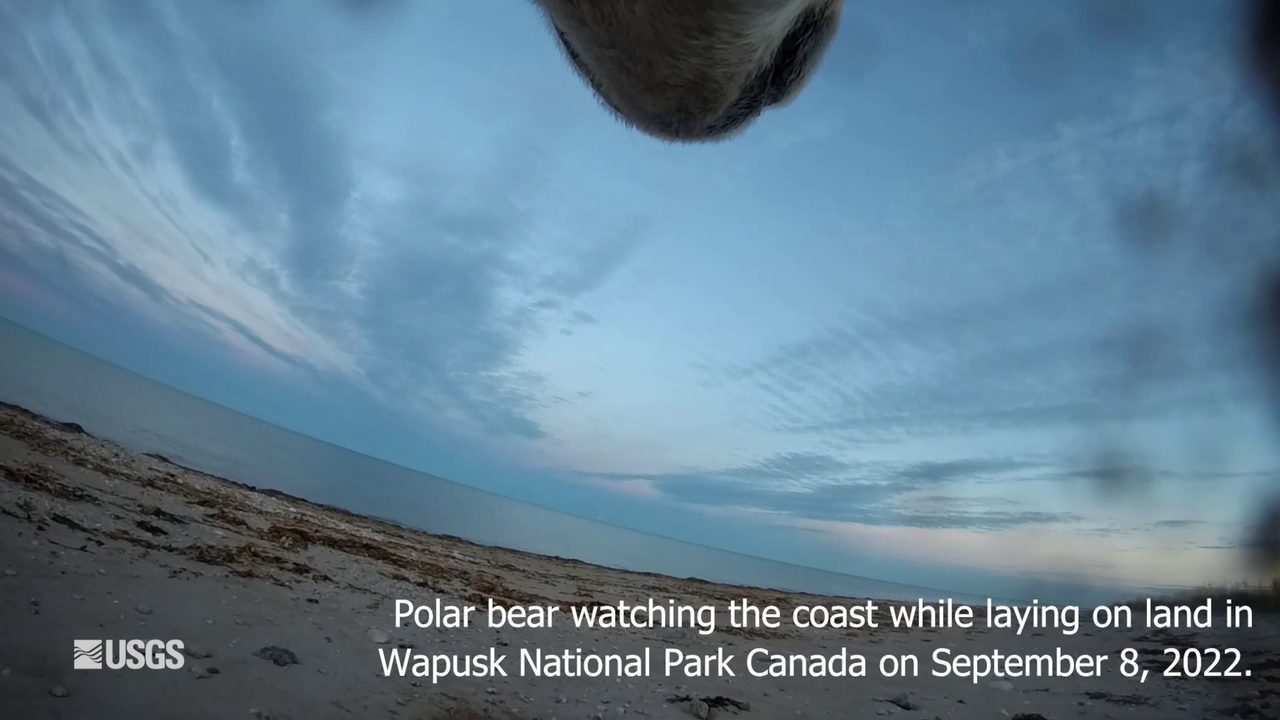
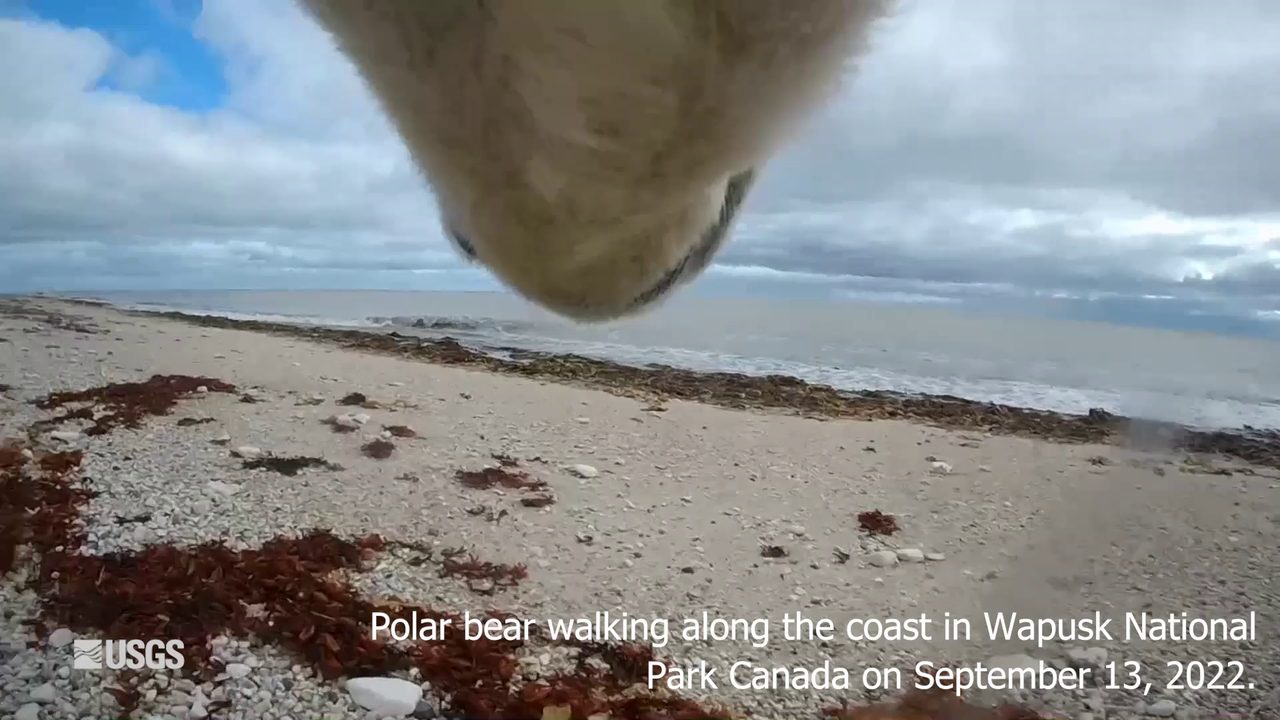
Scientists with USGS and Washington State University watched 20 polar bears through the part of summer when the sea ice is gone. Each bear wore a collar with a video camera, GPS and a motion sensor, and each was tracked for 19 to 23 days in August and September of 2019, 2021 or 2022.
The collars showed two very different strategies. Two bears conserved energy by lying down, and one adult male rested 98% of the time. His energy use fell to levels the authors compare to hibernation. The other 18 bears stayed active, and the most active one traveled 330 kilometers (205 miles) in the study window.
The result
Energy use varied five-fold between the quietest and the busiest bears. Weight loss did not vary nearly as much: nearly all the bears lost about a kilogram a day. Bears that foraged for berries, kelp, birds or caribou did no better than the ones that stayed put.
Only one bear gained weight, after finding a dead marine mammal on land. The authors say neither resting nor foraging lets bears last on land past a certain time, and two younger females were calculated to run out of reserves before the ice usually returns, around the end of November.
What is at stake
A co-author, Charles Robbins of the WSU Bear Center, summed up the result this way: "Polar bears are not grizzly bears wearing white coats." Grizzlies can fatten on berries and roots; a polar bear's body is built around seal fat.
In western Hudson Bay the ice-free period lengthened by about three weeks between 1979 and 2015, and bears now spend roughly 130 days a year on land. Modeling cited in the paper puts the decline in litter size at 22% to 67% by mid-century if females are forced ashore a month earlier than in the 1990s.
The western Hudson Bay population has already fallen by an estimated 30% since 1987. The same paper cites modeling that up to 24% of adult males could starve if the summer fast reaches 180 days.
All footage is USGS public domain. We re-saved frames and did not alter what the camera recorded.
Next case file 001 →A Wreckfish Swallowed a Shark Whole While Eleven Others Were Busy EatingThe record
- Date
- August–September 2019, 2021 and 2022
- Location
- Wapusk National Park and near Churchill, Manitoba, Canada
- Depth / setting
- On land
- Camera
- USGS GPS video collar on a free-ranging polar bear
- Animals
- Polar bear (Ursus maritimus)
- Footage
- U.S. Geological Survey
- Rights
- Public domain
Sources
- Pagano et al., "Polar bear energetic and behavioral strategies on land with implications for surviving the ice-free period," Nature Communications 15:947 (2024)
- Washington State University news release, February 13, 2024
- U.S. Geological Survey, "POV Polar Bear Collar Cam B-roll 2019, 2021, and 2022"
- Washington State University Research, "Polar bears unlikely to adapt to longer summers"
Published 2026-11-15 · Corrections: contact@wildevidence.com