No Sea Ice, No Seals: A Polar Bear's Collar Camera Caught It Eating a Dead Bird
In September 2022, a camera on a polar bear's collar in Manitoba recorded what the animal does when its main food is out of reach. It scavenges, and it was not enough.
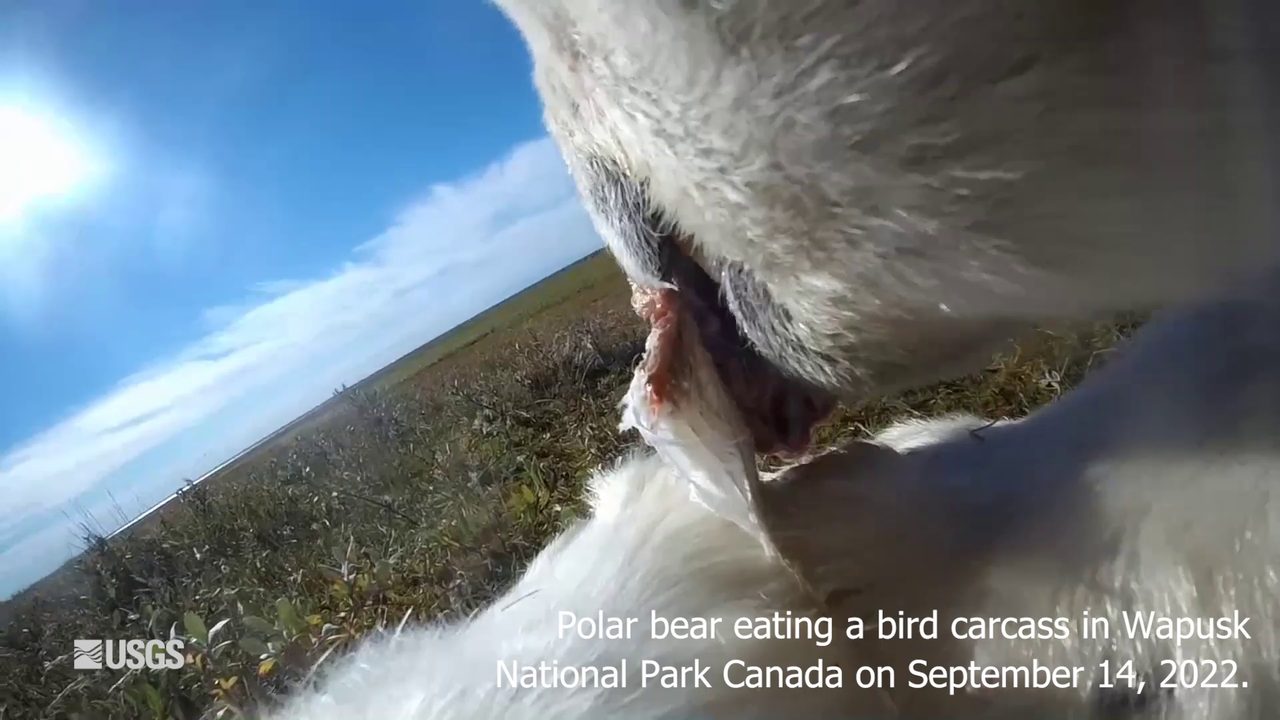
Polar bears hunt seals from sea ice. In western Hudson Bay the ice melts every summer and the bears are pushed ashore, where seals are out of reach. This clip, filmed on September 14, 2022, shows what one bear did about it: it ate a bird carcass.
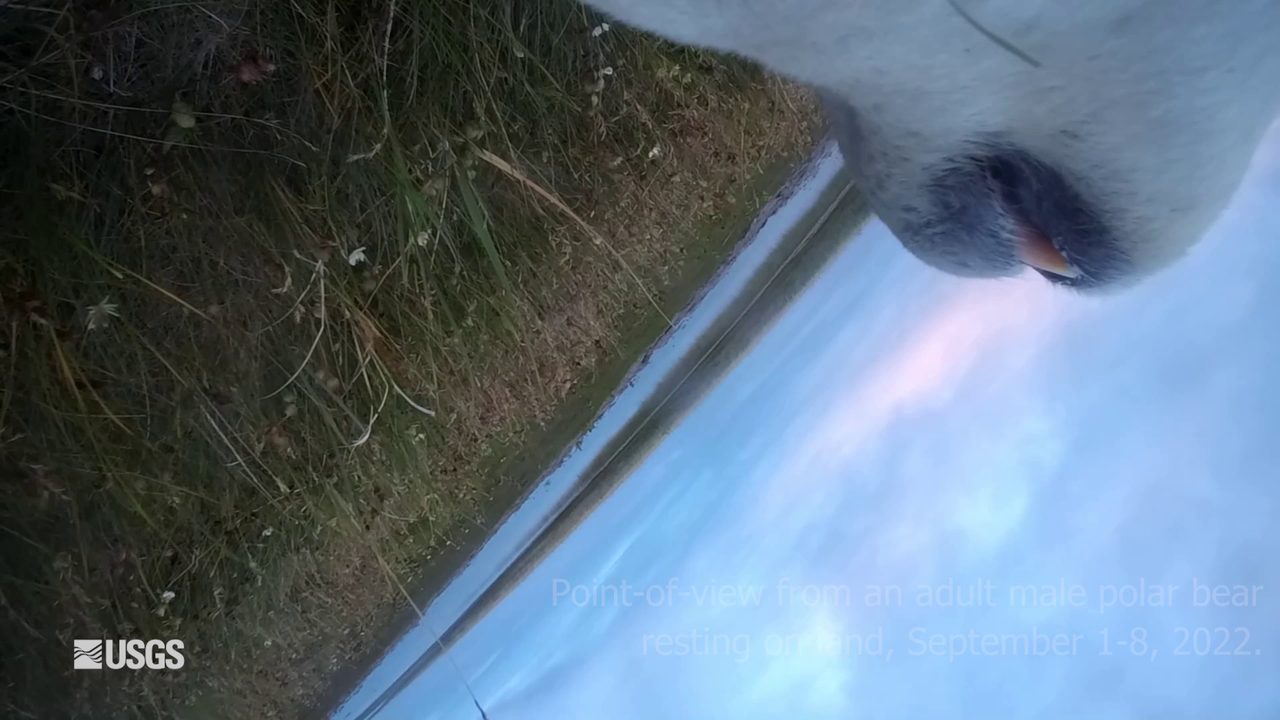
USGS dates and places the footage in Wapusk National Park. The camera sits on the bear's collar and looks forward and down, so the frame is mostly fur, tundra and whatever the bear is chewing.
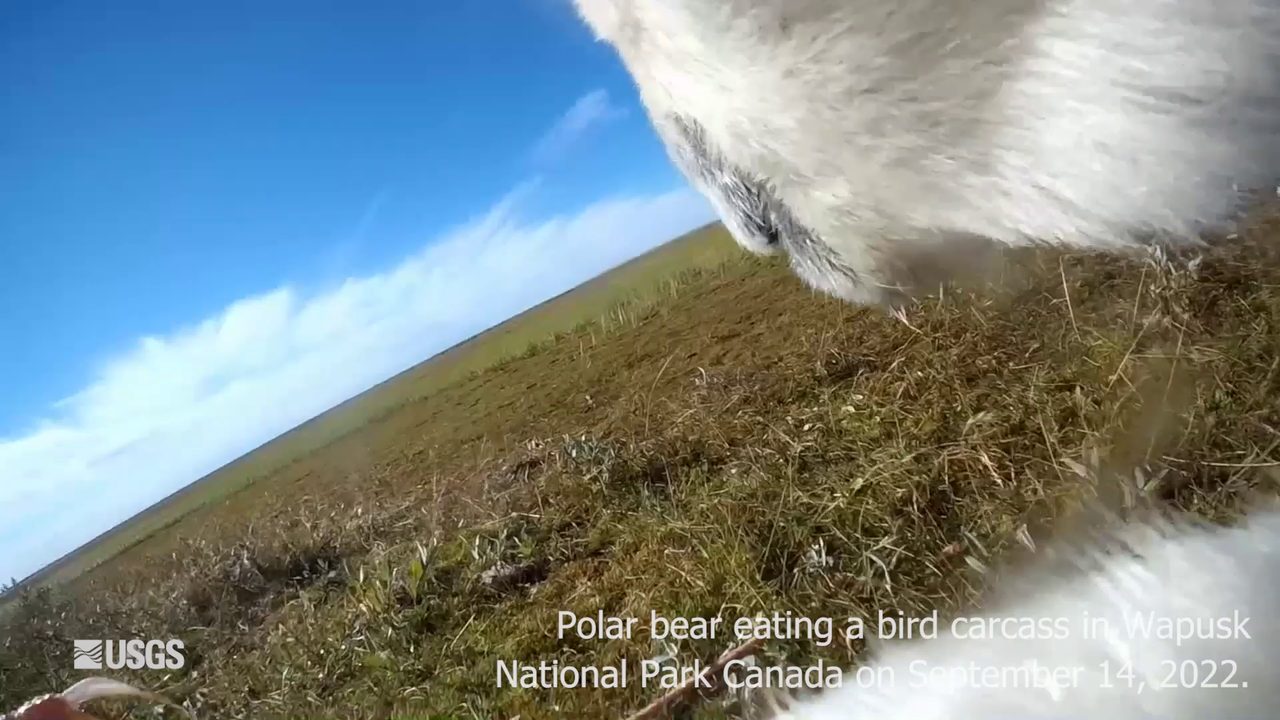
One meal, in context
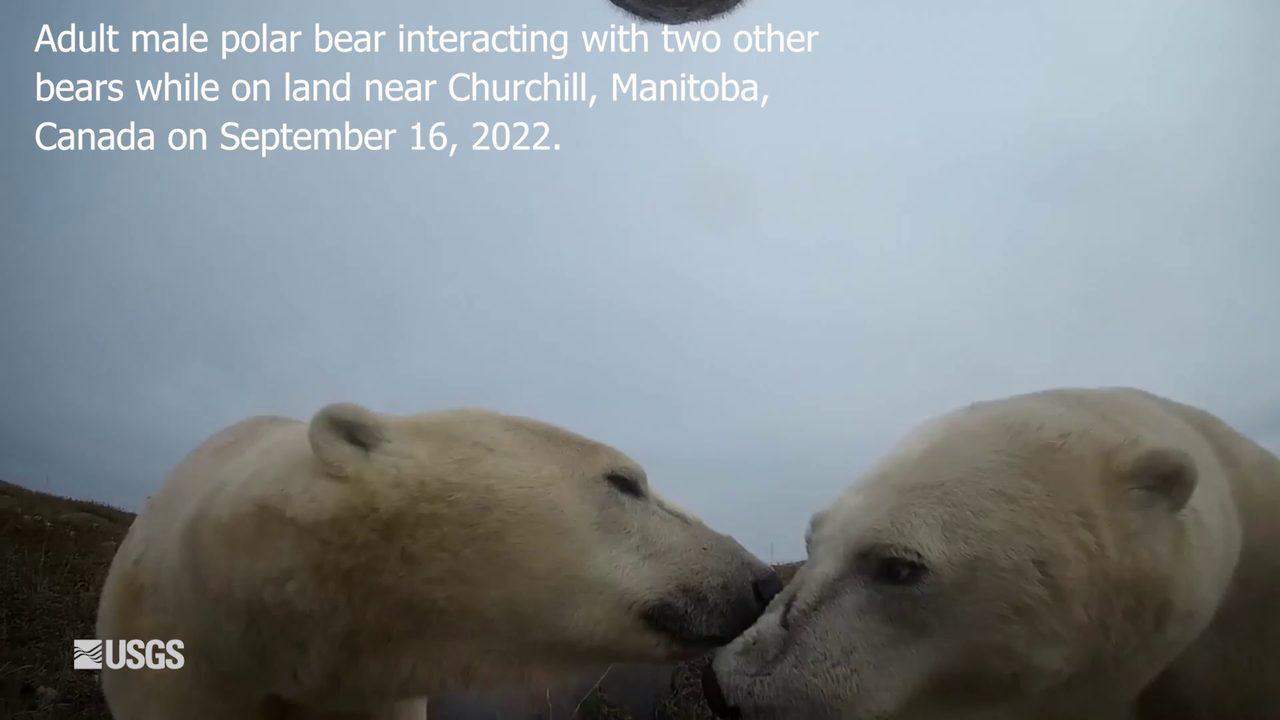
The footage comes from a study led by USGS biologist Anthony Pagano. Twenty bears wore GPS video collars for 19 to 23 days between August and September in 2019, 2021 and 2022. The researchers also measured how much energy each animal burned and how its body changed.
The result is the opposite of a feel-good scavenging story. Bears ate bird and caribou carcasses, berries, kelp and grasses, and still almost all of them lost weight, on average about one kilogram (2.2 pounds) per day. A bird is a small, lean meal for an animal that normally lives on seal blubber.
Only one of the 20 bears gained weight. It did so after finding a dead marine mammal on land, the one kind of food on shore that resembles what bears eat on the ice.
The bird is not unusual. A summary of the study reports that 94% of the collared bears ate some vegetation, such as grasses and kelp, and the cameras also caught bears eating berries and carcasses. Food on land is easy to find. The problem is how little energy it holds compared with a seal.
How the scientists measured the cost
Each bear was given a dose of doubly labeled water, a standard tracer that shows how much energy an animal burns over days. The team measured body composition at the start and end of each window, and used the collar's motion sensor and video to see what each bear was doing hour by hour.
Why it matters
In western Hudson Bay the ice-free period grew by about three weeks between 1979 and 2015, and bears now spend roughly 130 days a year on land. The authors concluded that eating what the land offers does not make up for the energy the bears spend finding it.
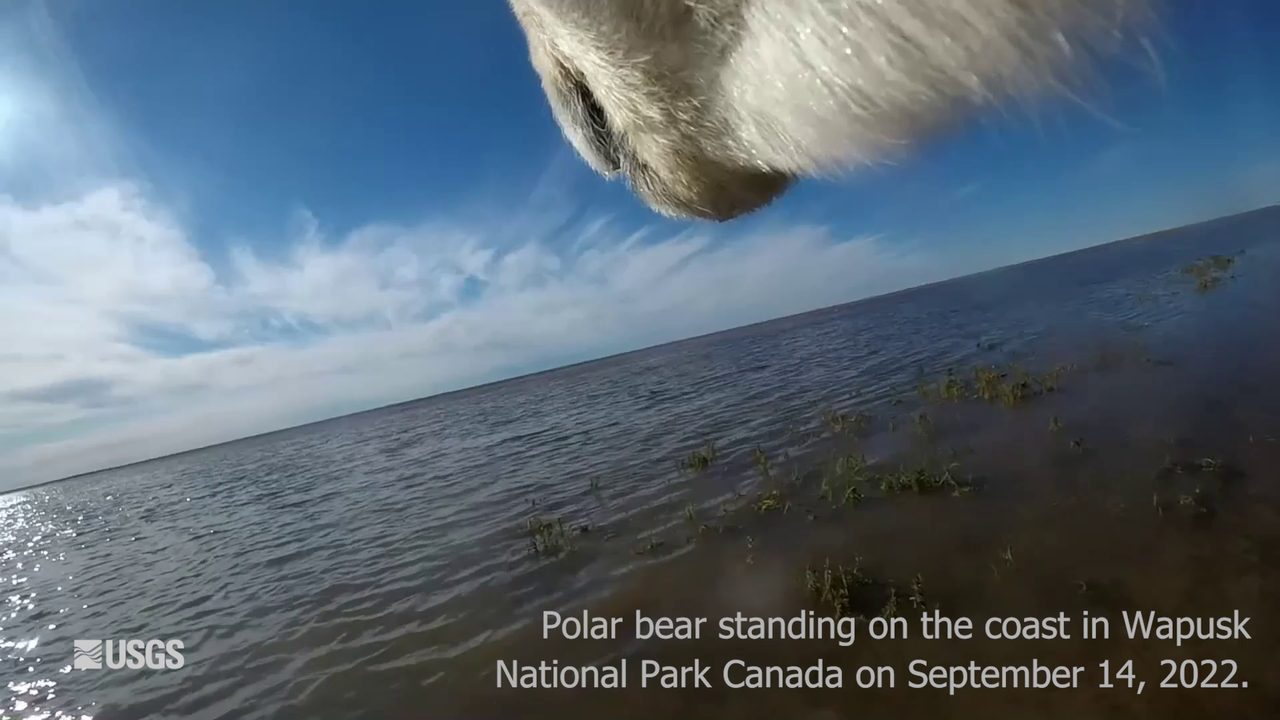
What the clip cannot tell us: the species of the bird, how long the bear fed, or whether the bear finished it. USGS's caption gives only the date, the place and the action.
This page uses USGS's own footage. We cropped and re-saved frames and did not alter what the camera recorded.
Next case file 010 →A Polar Bear Swam With a Seal Carcass in Its Mouth. The Camera Shows It Could Not Eat It.The record
- Date
- September 14, 2022
- Location
- Wapusk National Park, Manitoba, Canada (western Hudson Bay)
- Depth / setting
- On land
- Camera
- USGS GPS video collar on a free-ranging polar bear
- Animals
- Polar bear (Ursus maritimus); bird (species not identified)
- Footage
- U.S. Geological Survey
- Rights
- Public domain
Sources
- Pagano et al., "Polar bear energetic and behavioral strategies on land with implications for surviving the ice-free period," Nature Communications 15:947 (2024)
- Washington State University news release, February 13, 2024
- U.S. Geological Survey, "POV Polar Bear Collar Cam B-roll 2019, 2021, and 2022"
- Arctic Focus, "A polar bear's eye view into the increasing ice-free season"
Published 2026-11-15 · Corrections: contact@wildevidence.com