A Bobcat Raided a 14-Foot Python's Nest, Then Came Back to Face Her
A trail camera in Florida's Big Cypress National Preserve recorded the first known case of a native animal eating Burmese python eggs. Then the snake came home.
Burmese pythons are not native to Florida, and for years the story has only gone one way. A 2012 U.S. Geological Survey study found that raccoon and opossum populations in the Everglades had dropped by roughly 99 percent after the snakes spread.
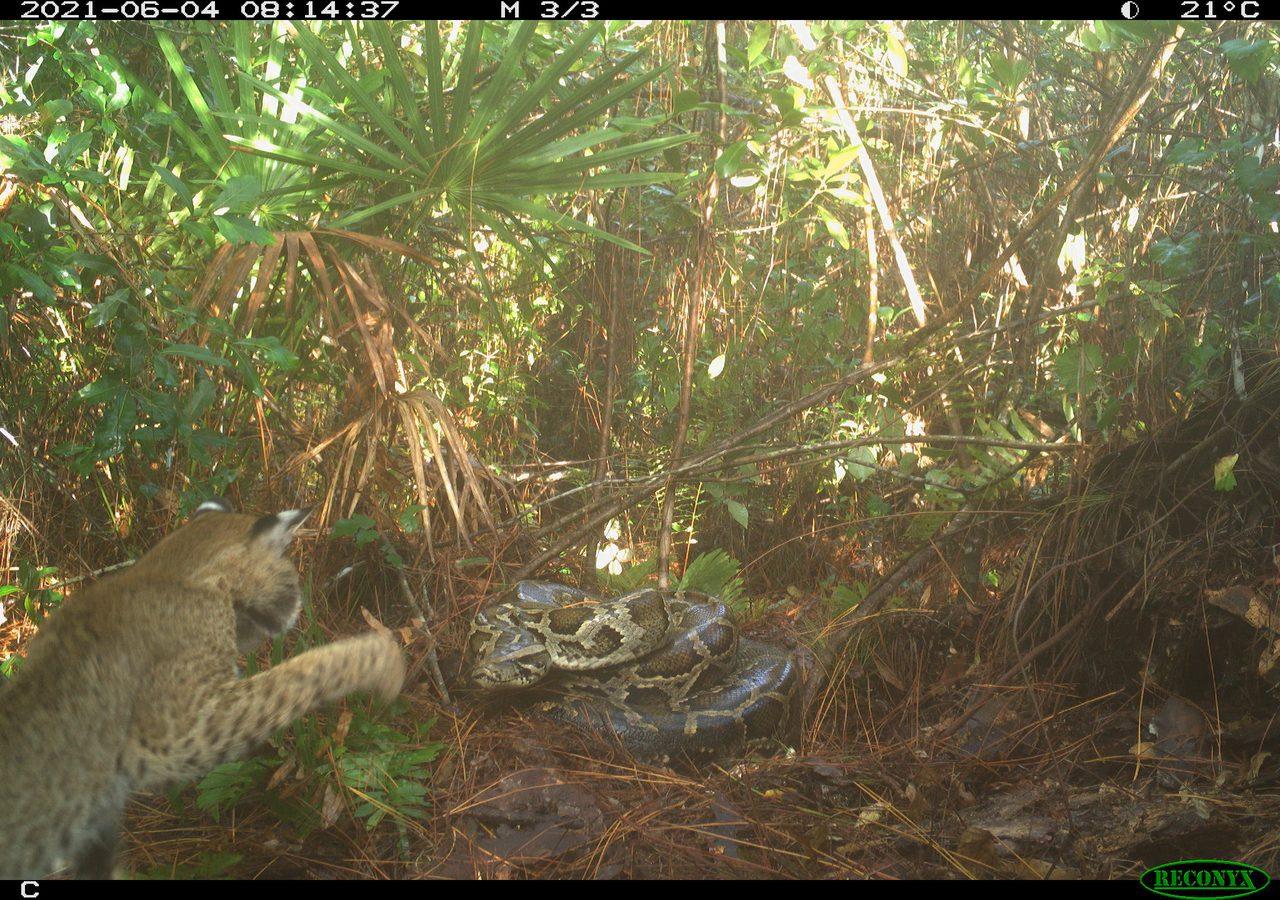
In June 2021, a camera set by USGS scientists at a python nest in Big Cypress National Preserve recorded a native predator going the other way.
What the camera recorded
- June 1, 10:35 a.m. Scientists set the camera. The female python, about 14 feet long, is coiled on her nest.
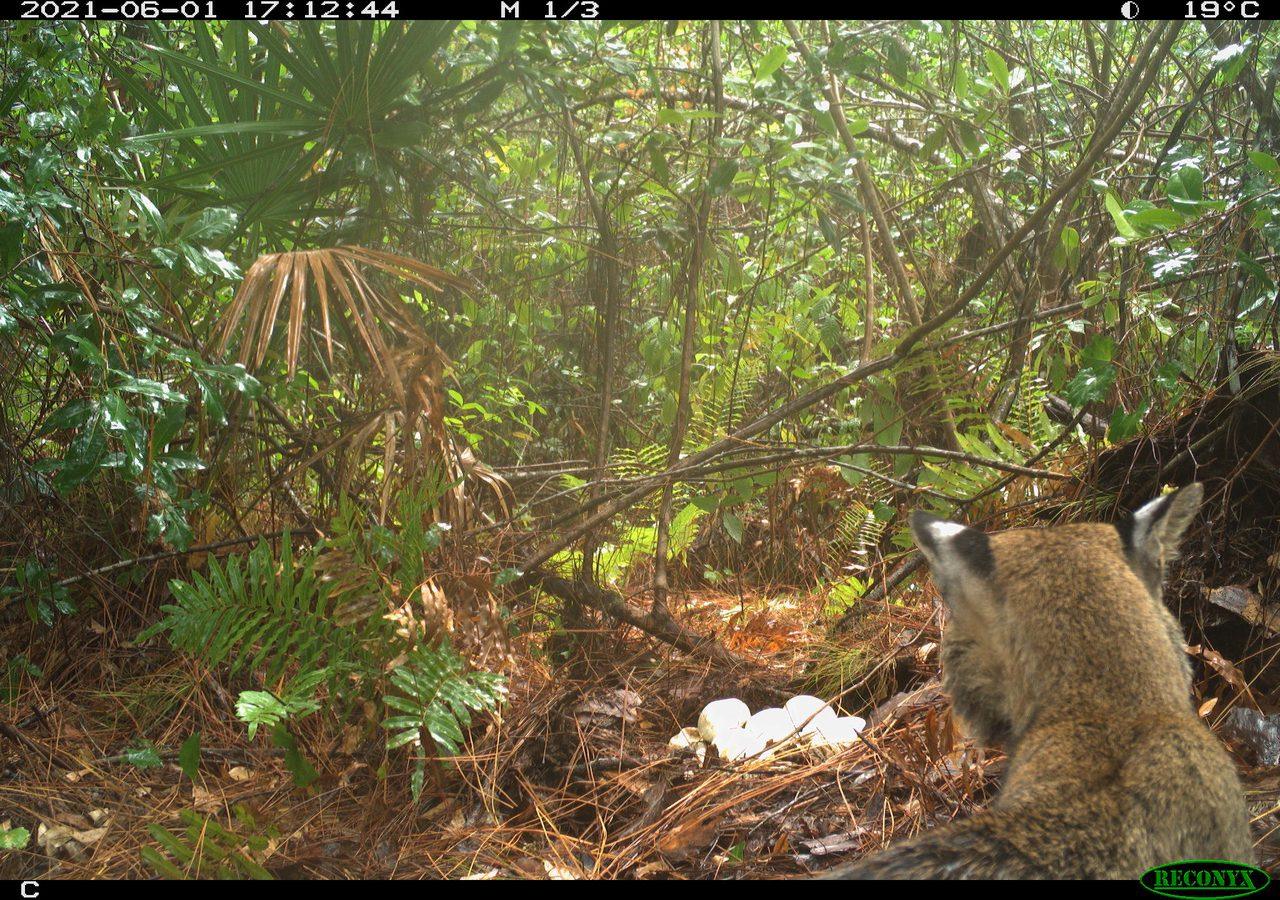
- June 1, 5:12 p.m. She is gone. A male bobcat finds the unguarded nest and, sixteen minutes later, is eating eggs.
- June 2, before dawn. The bobcat is back and eating again. At 6:51 a.m. the camera catches it with one front leg stretched out, caching eggs for later.
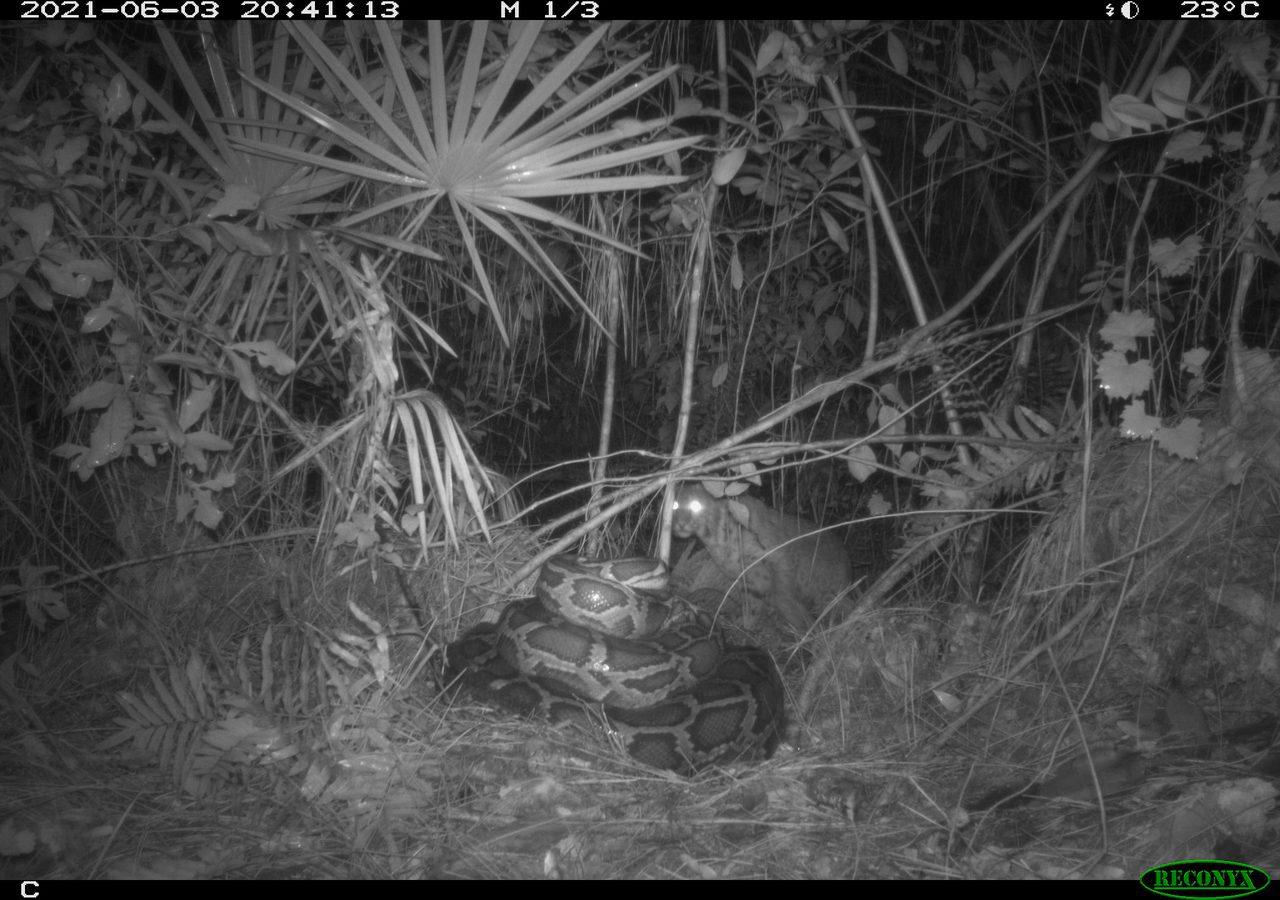
- June 3, 8:41 p.m. The python has returned. In the infrared image she is on the nest facing the bobcat, whose eyes shine in the background.
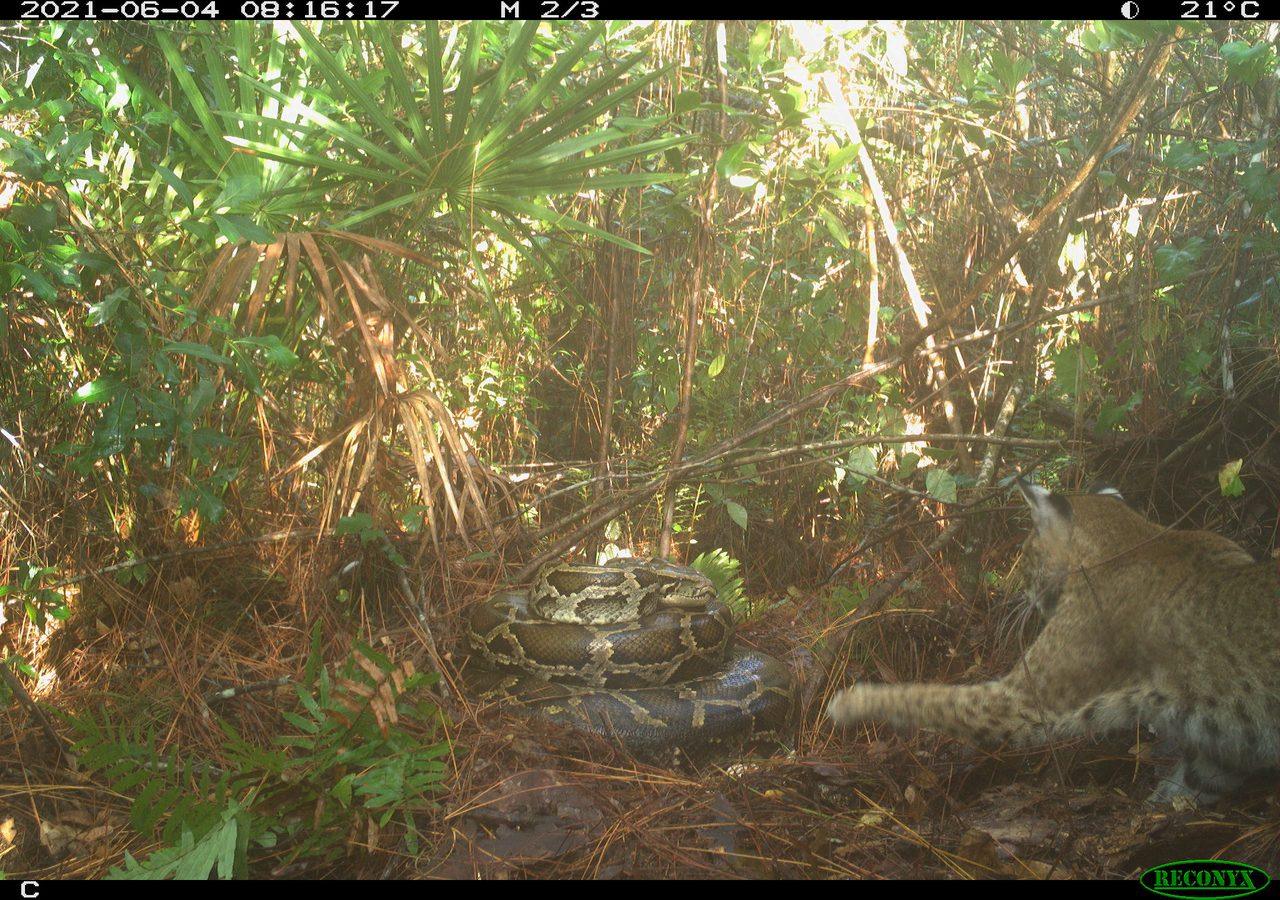
- June 4, 8:14 a.m. In daylight the bobcat approaches again and swipes at the snake. Two minutes later it charges and swipes a second time.
- June 17 and after. Biologists have removed the python. The bobcat keeps visiting, picking through the spoiled eggs, and is still checking the site on August 30.
Why scientists cared
When biologists reached the nest they counted 42 eggs that were destroyed or no longer viable. They took 22 damaged eggs to the lab to try to incubate them. None hatched.
According to USGS, this was the first documented case of any animal in Florida preying on python eggs, and the first evidence of an Everglades animal fighting back against one of the snakes. The photographs also suggest that the python struck at the bobcat at one point. The findings were published in the journal Ecology and Evolution in 2022.
What nobody knows yet
Whether this was one bold cat or a behavior other bobcats share. The camera recorded a single nest, and one raided nest does not change the outlook for an invasive species. What it does show is a native predator treating a python nest as food, and coming back to it with the snake at home.
How this was recorded
The photographs come from a motion-triggered trail camera that USGS scientists placed at the nest. USGS published the sequence, with the date and time of each frame, as a public data release under CC0. The times in the list above are taken from that release.
Next case file 003 →A Deep-Sea Shrimp Was Filmed Eating a Dragonfish That Was Still AliveThe record
- Date
- June 1–4, 2021
- Location
- Big Cypress National Preserve, Florida, USA
- Depth / setting
- Ground nest in forest
- Camera
- U.S. Geological Survey trail camera
- Animals
- Bobcat (Lynx rufus); Burmese python (Python bivittatus)
- Footage
- U.S. Geological Survey
- Rights
- CC0 1.0 (public domain dedication)
Sources
- U.S. Geological Survey data release: photo sequences, bobcat and Burmese python, 2021
- Ecology and Evolution (2022), the published study
- CBS News, March 16, 2022
- Field & Stream, egg counts
Published 2026-11-15 · Corrections: contact@wildevidence.com